
Blog
Hair Salon Lighting: Better Results with the Right Light

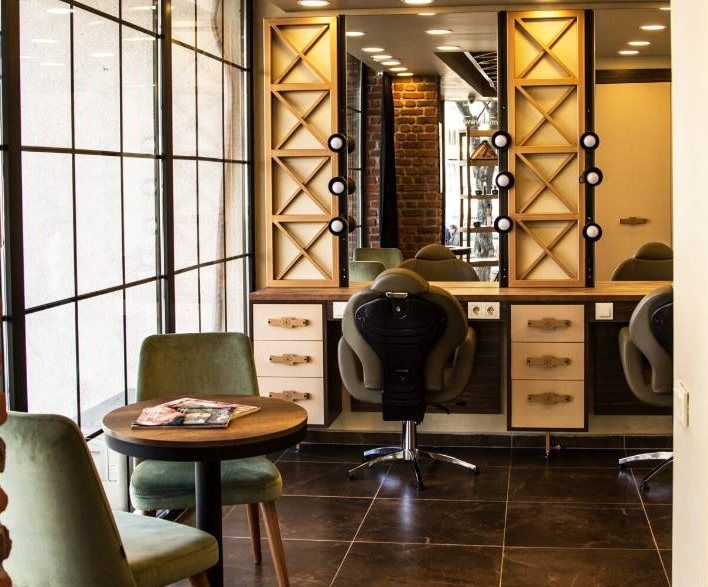
In a hair salon, lighting is an element that is invisible but determines everything. A paint job done under incorrect lighting can look completely different when the customer leaves; in a shadowed mirror, the details may disappear; and cold and harsh light can instantly destroy the atmosphere of the salon. In this guide, we discuss hair salon lighting planning in detail, from technical concepts to department-specific recommendations. For other stages of salon decoration, you can check out our hair salon decoration guide.
Why is lighting so important?
In hairdressing, color perception is everything. For applications such as hair coloring, highlights, and balayage, the stylist’s ability to see the color correctly is essential for the result to meet the client’s expectations. Additionally, the client’s feeling of self-confidence in the mirror directly impacts their satisfaction with the service. Proper lighting enhances working quality, reduces errors, beautifies the salon atmosphere, and improves the quality of photos shared on social media.
Basic concepts: color temperature and CRI
Color temperature (Kelvin)
The color temperature, which expresses the color of light, is measured in Kelvin (K) units. 2700–3000 K warm white (yellowish), 4000–4500 K neutral white, and 5000–6500 K provide cool white (blueish) light. Neutral white light of 4000–4500 K should be preferred, as it produces the closest result to natural daylight in hair salon work areas. In waiting, washing, and decorative areas, 2700–3000 K warm light creates a relaxing atmosphere.
Color presentation index (CRI)
CRI (Color Rendering Index) expresses how accurately a light source shows colors between 0 and 100. LED fixtures with a CRI value of 90 or higher should be used in hair salons, especially in workstations where painting is done. Under low CRI lighting, red tones can appear dull, and brown tones can look grayish, which leads to color mistakes.
Three-layer lighting plan
General lighting: Ceiling spotlights, linear LED fixtures, and panel lighting that illuminate the entire salon evenly. Provides a shadow-free and homogeneous base light. Task lighting: Light focused on workstations; LED strips around the mirror, illuminated frames, and applicators on both sides of the mirror. Ensures the stylist can see details clearly. Decorative lighting: Chandeliers, chandeliers, ring fixtures, hidden LED strips, and neon signs. Defines the character and atmosphere of the salon.
The balanced use of these three layers gives a functional and aesthetic result. While rooms that only use general lighting appear flat and dull, workspaces in rooms that rely solely on decorative lighting remain dark.
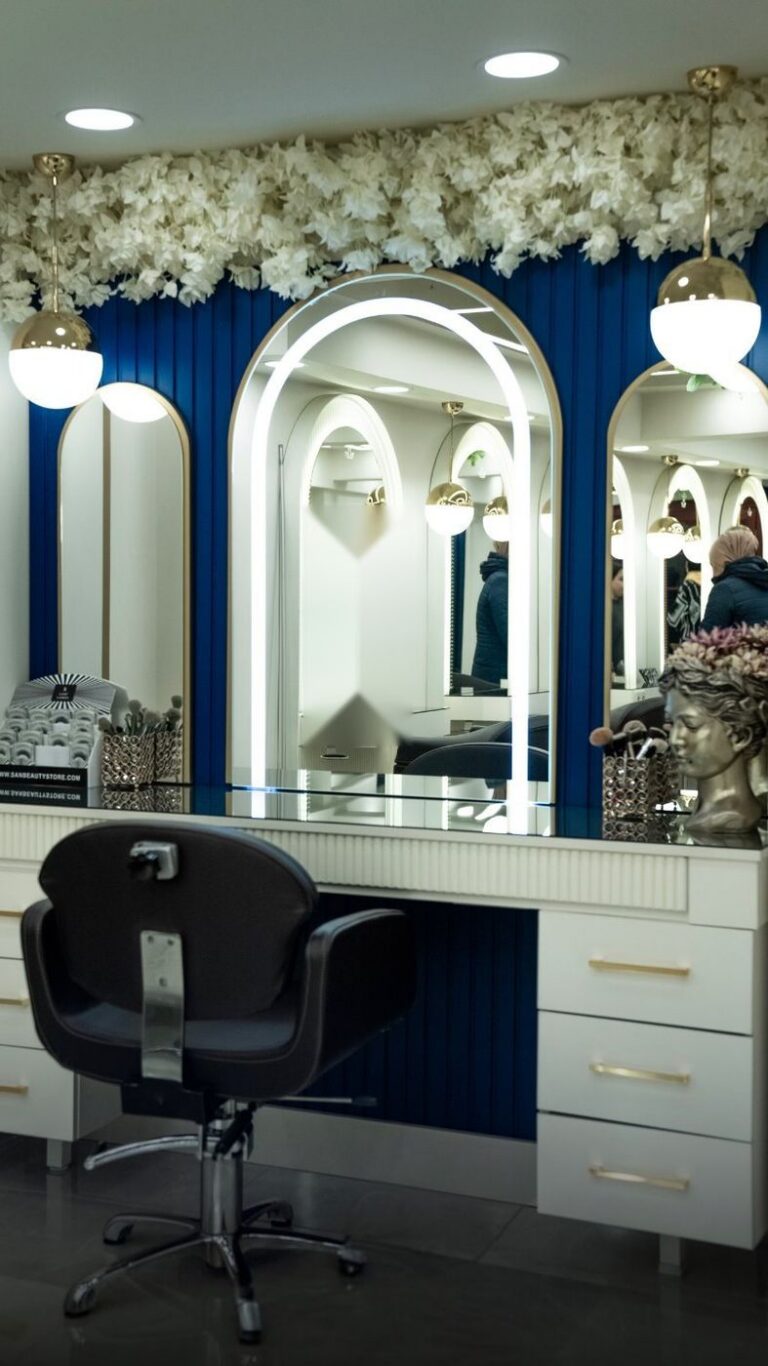
Mirror lighting: the most critical point
The one-way light coming from the ceiling creates shadows on the customer’s face and hair. Therefore, mirror lighting is the most important part of hair salon lighting. There are three common methods:
- LED rear lighting: The LED strips installed behind the mirror reflect a soft glow on the wall and provide a modern look. Illuminated marble mirror blue workstation is an impressive example of this method.
- Bulb frame: The bulbs placed along the edges of the mirror illuminate the face from all sides. It is especially preferred in makeup and bridal services.
- Side lights: The side lights placed on both sides of the mirror evenly illuminate the face from the sides and also stand out as a decorative element.
Integrating mirror lighting into the workstation body ensures that the cables are not visible and a clean appearance is achieved. Therefore, planning the lighting together with the workstation design is the correct approach.
Lighting recommendations by sections
workstations
4000–4500 K, high CRI, non-shadowed light. Mirror lighting should be combined with ceiling spotlights; the spotlights should be positioned not directly above the customer’s head but a little in front of them.
Washing area
In this area where the customer is lying on their back, light directly hitting the eyes is distracting. Indirect, soft, and warm-toned lighting should be preferred. Dimmerable (dimmer) fixtures create a relaxing atmosphere.
Reception and waiting area
A warm and inviting light, decorative chandeliers and hidden LEDs on product shelves highlight this area. Illuminating your logo strengthens brand perception.
Paint preparation area
In order for the colors to be mixed correctly, high CRI neutral white light should also be used in this area.
Make use of natural light
The natural daylight entering from the display front is the most ideal light for color assessment. Placing workstations perpendicular to the window or facing the window provides maximum benefit from natural light during daylight hours. Window-front oval mirror hair salon workstation is a good example of this approach. However, since direct sunlight hitting the mirror can be dazzling, tulle curtains or blinds may be necessary.
Energy efficiency and maintenance
LED fixtures consume much less energy than classic bulbs, have a longer lifespan, and emit less heat. In hair salons that are open throughout the day, this difference directly translates to lower electricity bills. Using timers and regional switches also helps save on lighting in unused areas. Using LED bulbs in fluorescent mirrors is important for both energy savings and customer comfort; older-style bulbs can emit uncomfortable heat because they are close to the customer’s face.
Common lighting mistakes
- Using light with a single type and single color temperature throughout the entire room.
- Prefering low CRI, cheap LED fixtures.
- Place the spots right on the customer’s forehead to create a shadow on the face.
- Adding mirror lighting later with external cables.
- Using harsh light that directly hits the eyes in the washing area.
- Overemphasizing decorative lighting and leaving the workspace insufficient.
Frequently asked questions
Which color of light should be used in the hair salon?
4000–4500 K neutral white light is recommended in work areas, and 2700–3000 K warm white light in waiting and washing areas.
Is an LED mirror better than a bulb mirror?
Both provide a shadowless light. Bulleted mirrors are more showy and have a stage atmosphere, while LED mirrors offer a more modern and simple look. The choice should be made according to the concept of the selection salon. For details, you can check our Hollywood mirror guide.
Result
A good lighting plan determines both the working quality and atmosphere of your hair salon. As Mobitimi, we design your workstations with mirror lighting, LED strips, and illuminated frames, hiding the cables within the body to achieve a clean and safe result. You can view all our models on our hair salon workstations page.
Request a Custom Quote for Your Salon
Send us the dimensions of your salon, a few photos and the model you like; we will design your workstations and salon furniture according to your measurements, color and working layout and send you a price quote within 24 hours.

